 A Shorthand social story about the building of Swansea University's Bay Library
Showing posts with label Swansea University. Show all posts
Showing posts with label Swansea University. Show all posts
Thursday, 18 February 2016
Thursday, 28 January 2016
A Year of Digital Adventure: building our digital estate
For Wales, 2016 is the Year of Adventure. In this fledgling digital world of ours though, every year is full of digital adventures, where new technologies, services, apps, ideas and people come to the fore.
The prologue to the digital adventure is about the idea that there will be a time after technological development to having an impact, to change the world; a time when Nanotechnology Meets Local History, a time when a global brand can be created through social media, and a time where technology is easy to choose, use, deploy and benefit from.
Some of these things are here and now. Some of these things take more time and more effort than most of us would like. Deciding what commercial technology to use in an ever changing market, and for ever changing users, is very hard. With open source, free, software, the time and resources required to deploy can still be a challenge - and even making a simple choice, which particular piece of software to use, can be a minefield.
Our digital estate is a key aspect of everything that will come next. An organisation or an individual's digital estate is their digital world and it is no less important than physical buildings and architecture or, in a personal sense, the fashions we choose to wear.
The digital estate can and does apply to cultures and countries - and what a fantastic challenge and opportunity it is to build on, and maybe beyond, Andrew Green's and the National Library of Wales' Theatre of Memory and create a truly Digital Wales.
Recently, two fantastic events at Swansea University brought some of this home. Last week the CHERISH-DE launch talked about how the project will develop innovative approaches to digital economy themes relating to humans, society and industry. The range of academics, from Swansea, Newcastle, Bath and others, and the commercial partners including local and global names, was broad and uplifting.
Today, at the Swansea University School of Management, Tourism professionals, data scientists and others met to discuss An Adventure in Big Data. This event covered areas such as big data, smarter cities, tourism, and what can happen when viral marketing turns political, turns around, and bites you. With visitors from Spain, Flanders, Denmark, the US and more, this was one of those meetings that had a distinct digital buzz about it. If Swansea University's School of Management can make discussions like this happen across the public and private sectors, then it might just hit on a winning formula.
As a number of the talks at both these events highlighted - the digital world is already here, ignore it at your peril.
The prologue to the digital adventure is about the idea that there will be a time after technological development to having an impact, to change the world; a time when Nanotechnology Meets Local History, a time when a global brand can be created through social media, and a time where technology is easy to choose, use, deploy and benefit from.
Some of these things are here and now. Some of these things take more time and more effort than most of us would like. Deciding what commercial technology to use in an ever changing market, and for ever changing users, is very hard. With open source, free, software, the time and resources required to deploy can still be a challenge - and even making a simple choice, which particular piece of software to use, can be a minefield.
Our digital estate is a key aspect of everything that will come next. An organisation or an individual's digital estate is their digital world and it is no less important than physical buildings and architecture or, in a personal sense, the fashions we choose to wear.
The digital estate can and does apply to cultures and countries - and what a fantastic challenge and opportunity it is to build on, and maybe beyond, Andrew Green's and the National Library of Wales' Theatre of Memory and create a truly Digital Wales.
Recently, two fantastic events at Swansea University brought some of this home. Last week the CHERISH-DE launch talked about how the project will develop innovative approaches to digital economy themes relating to humans, society and industry. The range of academics, from Swansea, Newcastle, Bath and others, and the commercial partners including local and global names, was broad and uplifting.
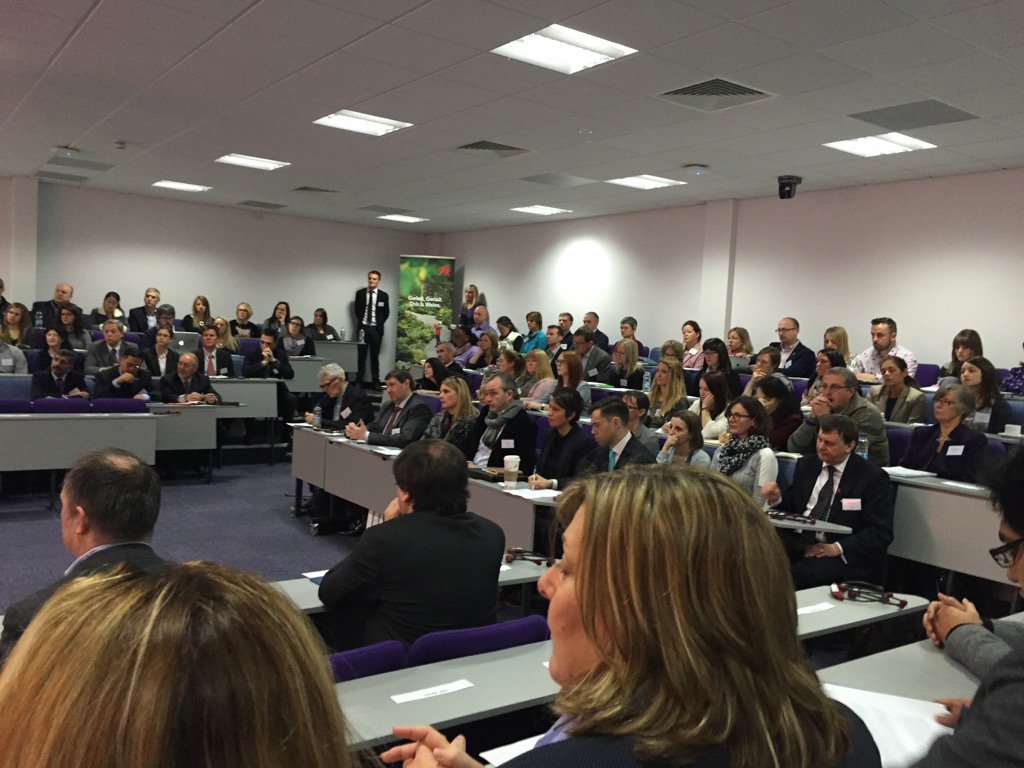 |
| An Adventure in Big Data |
As a number of the talks at both these events highlighted - the digital world is already here, ignore it at your peril.

Wednesday, 24 December 2014
The Demise of Welsh History?
Huw Bowen's suggestions for sustainable Welsh History:
http://www.clickonwales.org/2014/12/the-strange-death-of-welsh-history/
http://www.clickonwales.org/2014/12/the-strange-death-of-welsh-history/
There are many things that we could do, but here are two suggestions.
First, there should be an annual festival of Welsh history. We seem to have festivals of virtually everything in Wales, but for some reason not Welsh history. This is a major omission from the cultural calendar, and it is one that History Research Wales is well placed to rectify.
Second, there should be a properly funded Welsh Institute of Historical Research to serve the needs of communities, local councils, national institutions, and government. It should be the ‘go-to’ place for advice on the history that informs the development of every single form of activity that takes place. Such an institute would not only represent a ‘world first’ but also demonstrate that Wales is fully in touch with its past and properly understands its place in the broader scheme of things.
Wednesday, 1 October 2014
CODAH: Centre on Digital Arts and Humanities

CODAH aims to deepen links and share knowledge between staff and students in Arts and Humanities and Computing (and other disciplines), in terms of research, teaching, public impact, resourcing and strategy.
Dr Tom Cheesman (Dept of Languages) and Dr Robert S Laramee (Computer Science) are joint directors.
Saturday, 5 July 2014
A World of Welsh Copper: Cu@Swansea
 |
| Hafod and Morfa Copperworks from White Rock Image Credit |
The project website, among many other interesting things, includes a bibliography, powered by Zotero, for copper related research material, and it is this use of Zotero to provide open access, online bibliographies that is a nice example of simple digital technologies that can enhance projects.
Keep up with the news and follow the project @copperhistories
Monday, 28 April 2014
A Centenary History of Swansea City FC
This project is headed by Dr. Martin Johnes and is funded by the Heritage Lottery Fund in conjunction with Swansea University and the Swansea City Supporters’ Trust.
The ‘Swans100’ project is exploring, conserving and celebrating the heritage of Swansea City FC and commemorates Swansea City FC’s centenary. It has established an online archive, consisting of fans’ memories, photographs and other historic documents. The online archive that was created for the project includes education packs that schools can use to utilise football to teach maths, literacy and history. The project ran two museum exhibitions, community events, a children’s competition and produced a book of fan memories. Although essentially seen as completed the project still accepts submission to the ever growing digital archive that it has conceived.
Project website: http://scfcheritage.wordpress.com/
The ‘Swans100’ project is exploring, conserving and celebrating the heritage of Swansea City FC and commemorates Swansea City FC’s centenary. It has established an online archive, consisting of fans’ memories, photographs and other historic documents. The online archive that was created for the project includes education packs that schools can use to utilise football to teach maths, literacy and history. The project ran two museum exhibitions, community events, a children’s competition and produced a book of fan memories. Although essentially seen as completed the project still accepts submission to the ever growing digital archive that it has conceived.
Project website: http://scfcheritage.wordpress.com/
(Alex Berry)

Sunday, 27 April 2014
The Ancient Egyptian Demonology Project: Second Millennium BCE
This work has been the recipient of the Leverhulme Trust Research Project Grant, worth £158,220, and is headed by Dr. Kasia Szpakowska with the support of two PhD students, Zuzanna Bennett (Swansea University) and Felicitas Weber (Bonn University), at Swansea University for three years starting in January 2013.
The Project explores the world of demons in 2nd millennium BC Ancient Egypt (2000-1000 BC or Middle-New Kingdoms). The term “demon” is used within the project as categorizing term that includes ghosts, guardians, monsters, and other supernatural entities that appear between the categories of god, man, and king. It aims to provide a data-driven classification of Ancient Egyptian demons and related paraphernalia from the second millennium BCE. To establish an interactive database, accessible through a website, allowing data to be shared and augmented by other scholars and researchers and to apply new methods of data visualization to convey the results effectively and engagingly to scholars and the public alike.
Project Website: http://www.demonthings.com/demonology2k/
(Alex Berry)

What are the odds?
'What are the odds? Capturing and exploring data created by online political gambling markets': Headed up by Dr. Matthew Wall on an Arts and Humanities Research Council (AHRC) funded project – worth £76,001 – along with his Co-Investigators (Dr Stephen Lindsay – Lecturer in the Department of Computer Science at Swansea University and Dr Rory Costello – Lecturer in the Department of Politics and Public Administration at the University of Limerick).
The project will last for 15 months and builds on the intuition that the odds offered on gambling markets inform us about participants’ perception of the likelihood of possible outcomes for a given event. As these odds are published online, it is possible to gather them automatically, and to compile records of how the markets fluctuate over time. The project aims to gather information from these betting websites and analyse them in regard to referendum and election results and their odds.
This research that will be useful in judging shifts in electoral trends during a campaign at much more regular intervals than traditional polling. What are the odds?’ is a cross disciplinary project between political scientists and computer scientists. It aims to create a bespoke project website with a ‘research’ face containing the open-source tools, techniques and data generated by the project. The project received funding that allowed the employment of a Computer Science student at Swansea University who will develop and test an algorithm for scraping and analysing the data created by these online political gambling markets.
(Alex Berry)

The early History of the internet in Wales
Dr Rhys Jones' work is currently being written as a chapter for the Routledge Companion to Comparative Internet Studies (forthcoming in 2015).
It focusses on the portrayal of the Internet in the English-language press in Wales, and in the Welsh-language press, 1990-1996. These are the years when the Internet could be regarded as being in its infancy. Taken as a whole across both languages, the press articles demonstrate competing and complementary discourses regarding a new technology during a relatively early stage of its enculturation: the largely technophilic attitude towards new media during this time, characterised as ‘Internetphilia’ by Patelis (2000), is critically analysed, together with elements of moral panic in some other stories.
In a comparative context, the Welsh-language press emphasises language, cultural pressures and nationhood as the key factors likely to be shaped by the internet. The English-language articles, whilst concerned about Wales as a nation, adopt the rhetoric of the ‘information superhighway’ as a key driver of economic progress.
It focusses on the portrayal of the Internet in the English-language press in Wales, and in the Welsh-language press, 1990-1996. These are the years when the Internet could be regarded as being in its infancy. Taken as a whole across both languages, the press articles demonstrate competing and complementary discourses regarding a new technology during a relatively early stage of its enculturation: the largely technophilic attitude towards new media during this time, characterised as ‘Internetphilia’ by Patelis (2000), is critically analysed, together with elements of moral panic in some other stories.
In a comparative context, the Welsh-language press emphasises language, cultural pressures and nationhood as the key factors likely to be shaped by the internet. The English-language articles, whilst concerned about Wales as a nation, adopt the rhetoric of the ‘information superhighway’ as a key driver of economic progress.
(Alex Berry)
Saturday, 26 April 2014
Twitter and the Welsh Language
Work from Dr. Rhys Jones recently published jointly with D. Cunliffe and Z.R. Honeycutt : ‘Twitter and the Welsh language’, in Journal of Multilingual and Multicultural Development, Vol. 14 No. 7, pp. 653-671).
The project used an online questionnaire in order to gain an insight into the thoughts and feelings of Welsh speakers towards Twitter. It showed that Twitter provided a new domain for the production and consumption of the Welsh language, as well as enabling new connections between members of the Welsh-speaking community. It was in turn also a new domain for the production and consumption of the English language by Welsh speakers.
The intention is to continue research in this area via the use of further online questionnaires in order to gain a wider insight into the impact of Twitter.
(Alex Berry)

Delighted Beauty

“We want to make digital tools to help us explore world culture, by comparing how the same work is translated differently, over time and space, in the same and different languages. We want to develop text analysis and data visualization tools which will contribute to cross-cultural understandings and enable new research, new learning and teaching.”
A piece of work initially funded by RIAH (Research Institute for Arts and Humanities) and more recently by the UK Arts and Humanities Research Council under their Digital Transformations’ theme: AH/J012483/1
It aims to apply the power of digital media in order to come to a greater understanding of images of world culture via the use of an innovative idea the ‘Translation Array’. The project’s initial global cultural text used as a case study for this idea was Shakespeare’s Othello. The project has carefully analysed the multitude of translations of this work via the creation of a system to clearly overlay these variations and present them in a clear format for comparison and investigation. The project is still on going and can be visited at its own website here: http://www.delightedbeauty.org/
(Alex Berry)
About the Digital Adventure
In any great project there will be more than one strand, more than one thread, that will weave a path through activities, through participants, joining together communities in new endeavours.
The promise of the Digital Adventure is to create a truly great and global, welsh digital heartland. It should invigorate the local economy in Wales through encouraging the digital service infrastructure that will sustain the adventure; it should bring together the story, the community and the institutions; it should use the adventure to reflect the historical, technological, linguistic, cultural and political identities of Wales; and it should inspire academic research through Welsh Studies in a new, broadened guise that supports Wales’ own great adventure.
This digital adventure will require Welsh Institutions to come together in a way as yet unforeseen, adopting and creating methods as yet unknown, as exponential digital development is inherently impossible to plan. If we can build it, someone will do something completely unexpected and unexplored with it. The challenge is to build it, and build it in a way that will support a vibrant, emergent, digital and welsh culture.
Subscribe to:
Posts (Atom)