Showing posts with label computer science. Show all posts

Saturday, 20 August 2016

Digital Latin Library


Digital Latin Library - project and website


digitallatin.org

"The Digital Latin Library (DLL) is a joint project of the Society for Classical Studies, the Medieval Academy of America, and the Renaissance Society of America. The Andrew W. Mellon Foundation's Scholarly Communications Program funds the project, and the University of Oklahoma hosts it.

We use the word "library" to describe our project because that word's many meanings apply to what we're building: a library of texts and resources, a place where individuals and groups can study and collaborate on projects, a series of volumes published according to a uniform standard, and resources for digital applications."


Timeline (http://digitallatin.org/about-project/project-timeline)

2015–2017

In January, the OU DLL team submitted a proposal to the AWMF for a two-year implementation grant to build and implement the Digital Latin Library (DLL).

By the middle of 2017, we will deliver a collection of resources collectively known as the Digital Latin Library (digitallatin.org):
  • a specialized, standards-based library catalog of Latin texts and related resources, including authority files for authors, works, and manuscripts
  • a digital archive of scholarly materials related to critical editions
  • three pilot critical editions for the LDLT
  • a desktop application for advanced visualization and analysis of Latin texts
  • web-based applications for reading, annotating, creating, and sharing texts and commentaries
  • documentation for the continued maintenance of these resources after the funding period has ended.

Thursday, 28 January 2016

A Year of Digital Adventure: building our digital estate

For Wales, 2016 is the Year of Adventure. In this fledgling digital world of ours though, every year is full of digital adventures, where new technologies, services, apps, ideas and people come to the fore.

The prologue to the digital adventure is about the idea that there will be a time after technological development to having an impact, to change the world; a time when Nanotechnology Meets Local History, a time when a global brand can be created through social media, and a time where technology is easy to choose, use, deploy and benefit from.

Some of these things are here and now. Some of these things take more time and more effort than most of us would like. Deciding what commercial technology to use in an ever changing market, and for ever changing users, is very hard. With open source, free, software, the time and resources required to deploy can still be a challenge - and even making a simple choice, which particular piece of software to use, can be a minefield.

Our digital estate is a key aspect of everything that will come next. An organisation or an individual's digital estate is their digital world and it is no less important than physical buildings and architecture or, in a personal sense, the fashions we choose to wear.

The digital estate can and does apply to cultures and countries - and what a fantastic challenge and opportunity it is to build on, and maybe beyond, Andrew Green's and the National Library of Wales' Theatre of Memory and create a truly Digital Wales.

Recently, two fantastic events at Swansea University brought some of this home. Last week the CHERISH-DE launch talked about how the project will develop innovative approaches to digital economy themes relating to humans, society and industry. The range of academics, from Swansea, Newcastle, Bath and others, and the commercial partners including local and global names, was broad and uplifting.

An Adventure in Big Data
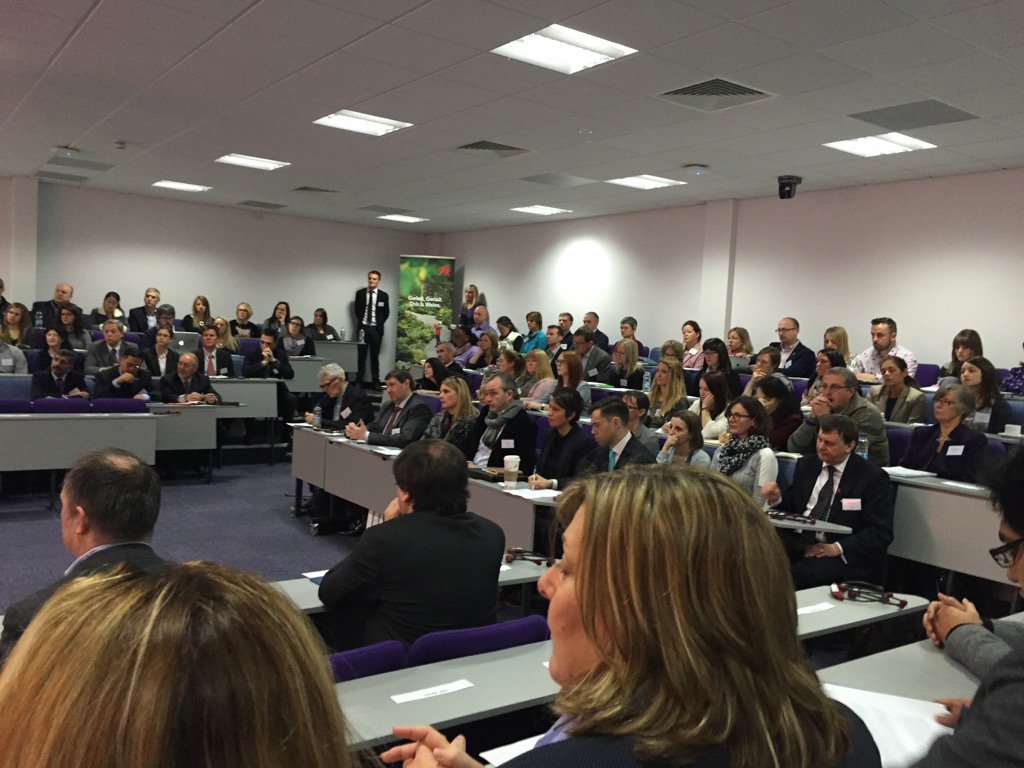
Today, at the Swansea University School of Management, Tourism professionals, data scientists and others met to discuss An Adventure in Big Data. This event covered areas such as big data, smarter cities, tourism, and what can happen when viral marketing turns political, turns around, and bites you. With visitors from Spain, Flanders, Denmark, the US and more, this was one of those meetings that had a distinct digital buzz about it. If Swansea University's School of Management can make discussions like this happen across the public and private sectors, then it might just hit on a winning formula.

As a number of the talks at both these events highlighted - the digital world is already here, ignore it at your peril.


Saturday, 6 June 2015

The Winograd Schema Challenge

An alternative to the Turing Test, an annual challenge with its first submission in October 2015.

http://research.nuance.com/wp-content/uploads/2014/08/WSC-announcement.pdf


See Nuance's website for more information.

Tuesday, 13 May 2014

Software, Digital Art, Data Curation & Archives! The 2014 NDSA Innovation Award Winners

Winner at the Delta County Fair, Colorado, Farm Security Administration/Office of War Information Color Photographs, http://hdl.loc.gov/loc.pnp/fsac.1a34201
Winner at the Delta County Fair, Colorado, 1940 Oct. Farm Security Administration/Office of War Information Color Photographs,http://hdl.loc.gov/loc.pnp/fsac.1a34201
The National Digital Stewardship Alliance Innovation Working Group is excited to announce the winners of the 2014 NDSA Innovation Awards. Each year the Innovation Working Group solicits nominations for  projects, individuals, and organizations doing innovative and substantive work in digital preservation. This is the third year we have handed out these awards and previous blog posts list the 2012 recipients and the2013 recipients.
From more than thirty nominations, the awards committee selected the following four winners. The winners illustrate the diversity of the digital preservation community, including students, educators, and practitioners and representatives from library, archives and museum communities. Please join us in congratulating them for their hard work.
Institution: National Software Reference Library, National Institute for Standards and Technology: Recognized for their substantial leadership in building a national collection of software, developing and sharing workflows and approaches for software preservation, and for modeling approaches to corpus analysis of born digital collections. You can learn more about the NSRL in this interview.
Project: XFR STN, The New Museum. “XFR STN” (Transfer Station) acts as “an open-door artist-centered media archiving project.” The project is recognized in particular for how it stands as a model for community-driven digital preservation activity, utilized existing platforms like the Internet Archive for long term preservation, and worked directly with artist and media creators to preserve their work.
Individual: Trevor MuñozAssistant Dean for Digital Humanities Research at the University of Maryland Libraries and an Associate Director of the Maryland Institute for Technology in the Humanities.  Recognized for his work developing and teaching best practices in data curation in the digital humanities and for his work advocating for digital preservation as a core function of librarianship, archival work, and scholarship.
Future Steward: Emily Reynolds, National Digital Stewardship Resident, The World Bank. Recognized for the quality of her work in a range of internships and student positions with ICPSR, University of Michigan Libraries, the Library of Congress, Brooklyn Historical Society, Storycorps, and, in particular, her recent work on the World Bank’s eArchivesproject.
The 2014 NDSA Innovation Awards will be presented at the upcoming Digital Preservation 2014, which will be held July 22-24 in Washington DC. More information on the conference will be available soon.

Sunday, 27 April 2014

What are the odds?


'What are the odds? Capturing and exploring data created by online political gambling markets': Headed up by Dr. Matthew Wall on an Arts and Humanities Research Council (AHRC) funded project – worth £76,001 – along with his Co-Investigators (Dr Stephen Lindsay – Lecturer in the Department of Computer Science at Swansea University and Dr Rory Costello – Lecturer in the Department of Politics and Public Administration at the University of Limerick).

The project will last for 15 months and builds on the intuition that the odds offered on gambling markets inform us about participants’ perception of the likelihood of possible outcomes for a given event. As these odds are published online, it is possible to gather them automatically, and to compile records of how the markets fluctuate over time. The project aims to gather information from these betting websites and analyse them in regard to referendum and election results and their odds.

This research that will be useful in judging shifts in electoral trends during a campaign at much more regular intervals than traditional polling. What are the odds?’ is a cross disciplinary project between political scientists and computer scientists. It aims to create a bespoke project website with a ‘research’ face containing the open-source tools, techniques and data generated by the project. The project received funding that allowed the employment of a Computer Science student at Swansea University who will develop and test an algorithm for scraping and analysing the data created by these online political gambling markets.
(Alex Berry)